

My First Investment and What Young Investors Can Learn From a Loss
At 19, Thomas was eager and optimistic as he made his first real stock purchase—intimately tied to nostalgia and family memory. But his $500 investment in RadioShack soon taught him a crucial lesson: emotional attachment can cloud financial judgment. The company, once a retail giant, was struggling against changing market dynamics and technological disruption. Trading fees meant Thomas needed a gain just to break even, but instead, he faced loss.
That loss, however, was his greatest teacher. It sparked a thirst for knowledge—a commitment to understanding how businesses really work, beyond the surface appeal of ads or familiar names. From dissecting financial reports to mastering sector-specific metrics, Thomas transformed early failure into invaluable wisdom.
His story is a powerful reminder that the best investment isn't always a stock—it’s the education you build before risking your money. For young professionals today, the market offers countless ways to learn without risking a cent. Because in investing, as in life, learning without losing is the ultimate power move.
Let me know if you want it shorter, more dramatic, or tailored differently!

Adam Smith Knows Which Sectors of U.S. Manufacturing Make Our Nation Wealthy
Adam Smith famously observed that England’s wealth grew not by hoarding precious metals like Spain, but through manufacturing high-value hardware products that packed great economic worth into small packages. Today, this principle holds more true than ever. The United States should protect manufacturing sectors with exceptionally high value per pound—such as semiconductors, pharmaceuticals, aerospace, and medical devices—that rely on advanced manufacturing and cleanroom technologies. These industries create insurmountable competitive moats through technological complexity, regulatory barriers, and capital intensity. Meanwhile, low-value, labor-intensive industries like textiles and basic metals should be allowed to shift to cost-advantaged regions. By embracing this strategic focus, America can sustain its economic leadership, create skilled employment, and leverage its unique manufacturing moats in the global economy.

The Nuclear Response to America's Surprising Surge in Electricity Demand
Explore how America’s surging electricity demand from AI and clean energy reshapes the grid. Discover Small Modular Reactors like Aalo Atomics’ designs providing reliable, carbon-free power. Learn about challenges and global competition shaping energy’s future. Ideal for entrepreneurs and investors focused on sustainable, cutting-edge solutions.

QuickBooks for Lean Manufacturing: Smarter Record Keeping and Business Intelligence for Central Texas Manufacturers and Warehouses
Central Texas is experiencing a manufacturing renaissance driven by lean principles and digital transformation. Major facilities like Tesla's Austin Gigafactory and Samsung's semiconductor operations anchor this dynamic region, leading suppliers and warehouses to adopt sophisticated financial management systems. Through QuickBooks implementation tailored for lean manufacturing, Longitude Financial Planning helps local manufacturers eliminate waste, gain real-time financial visibility, and optimize product profitability. This integration of operational excellence and financial clarity empowers Central Texas companies to scale efficiently, respond swiftly to market changes, and sustain competitive advantages in an evolving industrial landscape.

Achieving Alpha Through Strategic Differentiation: The Firefly Aerospace Model for Young Professionals and Entrepreneurs
Achieve sustainable competitive advantage with strategic differentiation inspired by Firefly Aerospace's rapid-response launch model. Discover how young professionals and entrepreneurs can generate alpha by embracing operational agility, market creation, and innovative specialization—leveraging lessons from Tesla, 3M, and the Austin tech ecosystem to stand out in competitive markets.

I Bonds After the Pandemic: From 9% Returns to Strategic Positioning
If you bought I bonds during the pandemic when inflation spiked to nearly 9%, you captured exceptional returns unmatched by most safe investments. But with I bond rates now normalized around 4%, what’s next? This post unpacks how I bonds work—tracking inflation via the Consumer Price Index for All Urban Consumers (CPI-U)—and explores when these bonds perform best. Learn why I bonds remain a smart hedge against inflation, how to buy and redeem them through TreasuryDirect, and how they fit strategically in today’s changing economic landscape marked by anticipated Federal Reserve rate cuts and ongoing inflation concerns. Whether holding pandemic-era bonds or considering new purchases, this guide offers clear insight to help navigate the evolving landscape of inflation-protected investing.

Three Essential 401(k) Decisions for New Professionals: A Strategic Guide for Building Wealth While Managing Debt
New professionals face three critical 401(k) decisions: maximizing employer matching contributions, choosing between traditional and Roth accounts for optimal tax benefits, and balancing retirement savings while managing student loan debt. Leveraging new SECURE 2.0 provisions and smart saving strategies can unlock decades of compounding growth and long-term financial security.
Smart Tax Planning and Retirement Account Reviews Save You Money, Time & Stress
Discover how proactive tax strategies and reviewing old 403(b) accounts helped my clients avoid costly mistakes, save thousands annually, and confidently plan for their financial futures.

Three Lessons from My First Year as an Independent Financial Planner
Starting your own business is both rewarding and challenging. After a year as an independent financial planner, I’ve identified three key lessons every entrepreneur should know: the critical importance of thorough record keeping, navigating business with friends and family through clear communication, and leveraging consistent marketing strategies to grow your client base. These insights provide a solid foundation to build a trusted, compliant, and thriving business. Ready to elevate your business? Schedule your free small business consultation today.
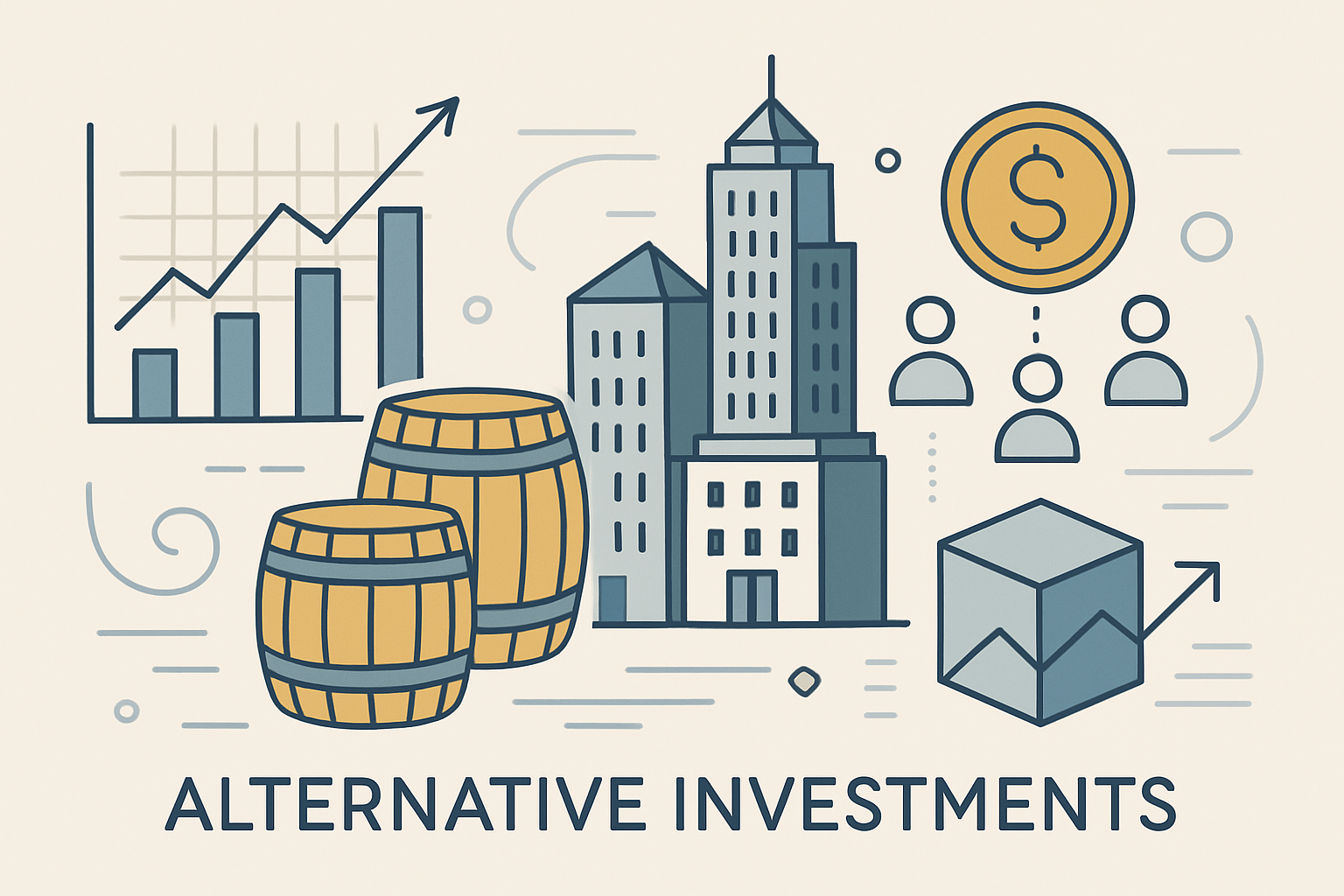
Alternative Asset Guide for Young Professionals: Beyond Stocks and Bonds
Alternative assets offer young professionals powerful tools to diversify beyond traditional stocks and bonds, helping navigate today’s volatile markets and low yields. Structured products provide engineered returns with built-in downside protection, blending bonds and derivatives for customized risk-reward profiles. Real Estate Investment Trusts (REITs) democratize real estate investing with dividend income and liquidity, while also serving as natural inflation hedges. Bourbon barrel investments deliver tangible asset exposure with strong historical appreciation, offering a unique inflation-protected physical asset that matures over years. Crowdfunding platforms like AcreTrader and Kickfurther allow direct participation in farmland and inventory financing, respectively, opening access to real economic growth opportunities with transparent fee structures.
Why this matters: Incorporating alternatives thoughtfully can enhance return potential and reduce correlation risk, helping young investors build resilient, diversified portfolios aligned with their financial goals and time horizons. This strategic inclusion supports long-term wealth accumulation beyond the limits of conventional asset classes.

Hire Your Kids, Slash Your Taxes, Grow Your Legacy
Unlock Powerful Tax Savings for Your Family Business
Are you a small business owner with a young family? Discover how hiring your kids and spouse can transform your tax bill, boost family wealth, and teach the next generation real-world skills—all fully supported by IRS rules.
By employing your children (ages 7–17) in your sole proprietorship or spousal partnership, you can pay them a fair wage for legitimate work—think office help, inventory, or even assisting with social media. Their earnings, up to $14,600 per year, can be tax-free, and they qualify for payroll tax exemptions that save your business up to 15.3% in FICA taxes. Plus, your child can start building retirement savings now by contributing to their own IRA.
Hiring your spouse opens even more doors. Set up a Section 105 plan to deduct your family’s medical expenses as a business expense—potentially saving thousands annually. Doubling up on Solo 401(k) contributions? Yes—you and your spouse can each maximize contributions, accelerating your path to financial freedom.
These strategies aren’t loopholes—they’re time-tested techniques rooted in the Internal Revenue Code, backed by court precedent, and require only one thing: careful documentation. With proper job descriptions, timesheets, reasonable pay, and a compliance plan, your family business can confidently utilize these benefits and build generational wealth.
Ready to work smarter—together? Explore the full guide to family employment tax strategies and watch your family and your business flourish.

The Value of Financial Literacy from a Young Age: A Guide for Parents of Children Ages 11-18

4 Strategies to Deal with Uneven Paychecks
4 Strategies to Deal with Uneven Paychecks

Creating Corporate Competition, Deep in the Heart of Texas
Texas Stock Exchange